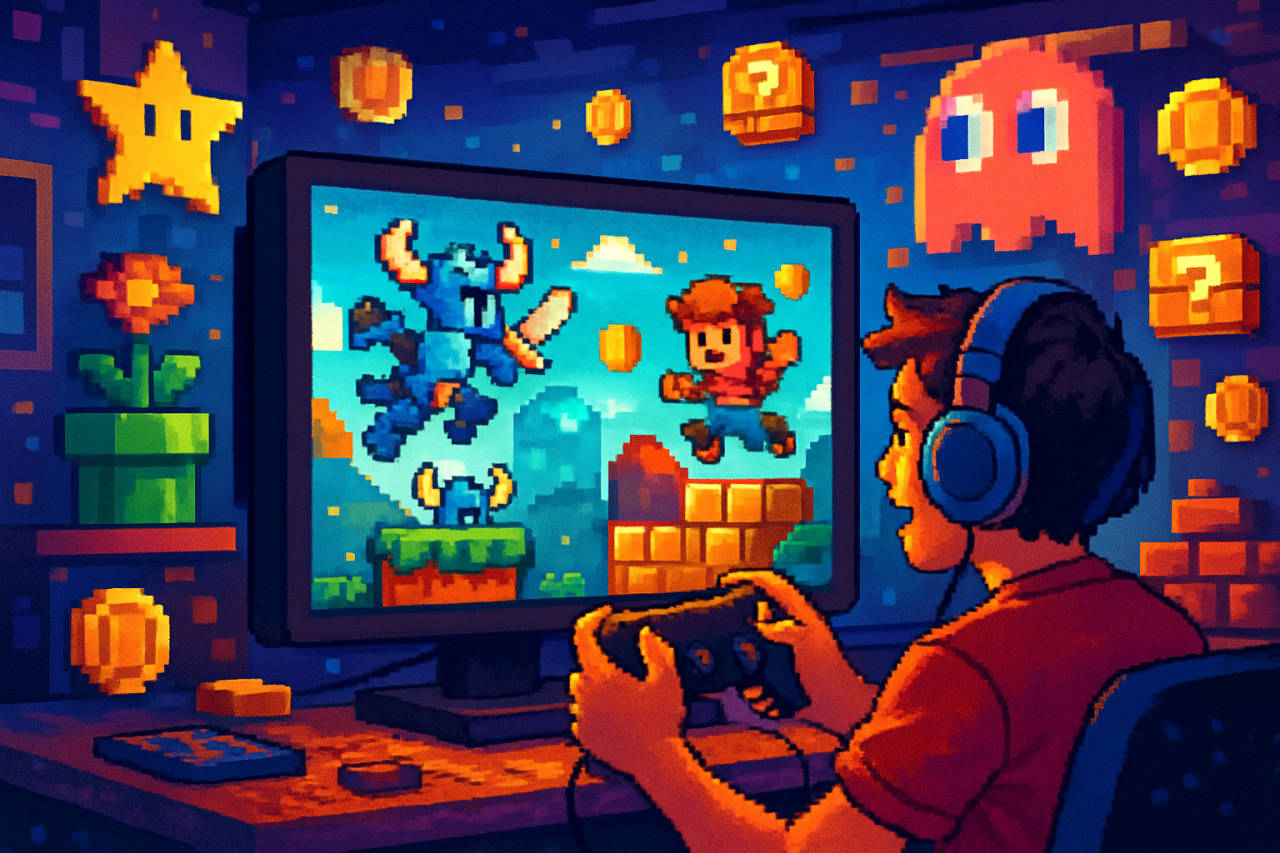
AI-Generated Game Worlds: Where Pixels Dream in Code
Let’s admit it: Once upon a time, procedurally generated maps meant a few random trees and maybe a mountain shaped suspiciously like a potato. But thanks to AI, today’s game worlds are less “potato-mountain” and more “galaxies-that-make-you-forget-to-eat-lunch.” The question is—are these AI-crafted universes actually fun to play in, or are we just marveling at their digital wizardry?
Let’s explore the wild frontier of AI-generated game worlds, where every playthrough is a Schrödinger’s Cat of surprise and delight. (Or maybe just a cat stuck in a wall. AI’s not perfect yet.)
Trendspotting: The Rise of Algorithmic Architects
Remember when No Man’s Sky promised 18 quintillion planets? At launch, it was more “quantity over quality” (with all due respect to the Sentinels). Enter the new wave: Minecraft’s lush biomes evolving with machine learning, Dwarf Fortress’s AI-driven societies, and indie darlings like AI Dungeon, where the world bends to every outlandish prompt (“You become a sentient loaf of bread. Roll for initiative!”).
The trend? AI is no longer just sprinkling rocks. It’s building entire civilizations, histories, and yes, occasionally, potato-shaped mountains.
Review Roundup: Exploring the Uncharted
- Dwarf Fortress: The original mad scientist of world gen. Its AI creates legends, dynasties, and drama more complex than a season of Game of Thrones. Best played with a wiki open and a sense of humor about catastrophic flooding.
- No Man’s Sky (2024 update): The planets are finally weird in a good way. Expect flora that looks like it was designed by a caffeinated botanist. Is every planet worth exploring? No. But the chance of stumbling onto something breathtaking is the hook.
- AI Dungeon: It’s like having a dungeon master who just drank five espressos. The AI responds to anything, and I mean anything. Sometimes the story gets delightfully strange—other times, well, the laws of physics are more like guidelines.
Comparisons: Hand-Crafted vs. AI-Generated
AI-generated worlds are like randomly shuffling a playlist: endless variety, occasional masterpieces, and the odd out-of-place song (or a castle floating for no reason). Hand-crafted worlds, on the other hand, are that perfect mixtape—curated, cohesive, but replay it enough and you know every beat.
With AI, you trade a little polish for infinite possibility. The best games? They mix both, letting designers guide the AI, like a jazz band riffing on a theme.
Reflections: When AI Gets Creative (And Weird)
The magic of AI-generated worlds is that sense of discovery. It’s not just “What did the devs hide here?” but “What did the AI dream up this time?” Sometimes you find a majestic alien vista. Other times, you discover a town named “Blarghville” run by a duck mayor. Both are wins, in my book.
Here’s the spark: AI isn’t replacing creativity. It’s giving us a universe-sized canvas and a paintbrush that sometimes has a mind of its own. The future? Imagine collaborative world-building, where your wildest ideas and the AI’s unpredictable flair create something neither of you could imagine alone.
So next time you boot up a game and the map looks a little odd, remember: somewhere, an AI is dreaming in code—and it’s inviting you to play.
Game on, explorers. 🕹️

Comments (0)
There are no comments here yet, you can be the first!