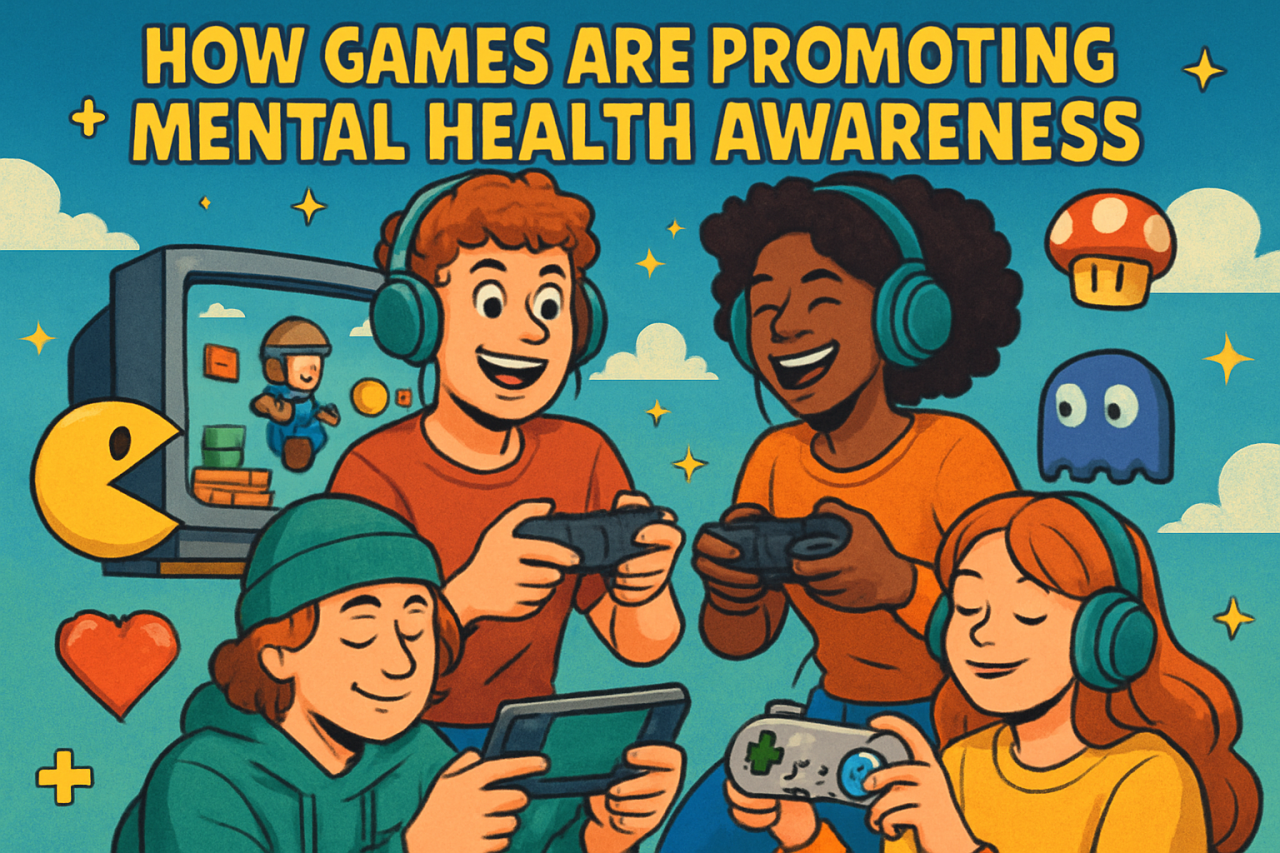
🎮🧠 Level Up: How Games Are Powering Up Mental Health Awareness 🕹️✨
If you thought games were just about crushing candies, building blocky castles, or yelling “no scope!” at your screen, think again. The digital playground is now doubling as a safe space for mental health conversations, and—plot twist—it’s working. Let’s respawn into this trend and see how games are championing awareness, one side quest at a time.
The Heartfelt Side Quest: Reviewing “Celeste”
First up, let’s talk about “Celeste”—a pixel-perfect platformer that’s less about climbing a mountain and more about scaling your own anxieties. On the surface, it’s a game about precision jumps and dodging spikes. But beneath the pixels, it’s a masterclass in empathy. The protagonist, Madeline, battles anxiety personified. The game doesn’t shy away from panic attacks or self-doubt. Instead, it hands you a controller and says, “Let’s get through this together.” And when you finally reach the summit? That’s not just a high score—it’s a high-five for self-compassion.
Compare & Contrast: “Animal Crossing” vs “Hellblade: Senua’s Sacrifice”
Now, let’s compare two heavyweights—“Animal Crossing: New Horizons” and “Hellblade: Senua’s Sacrifice.” On one end, we have Tom Nook’s debt simulator, where the biggest worry is whether your virtual turnips will rot before you can sell them. AC:NH is all about cozy connections and gentle routine. During the pandemic, it became a virtual therapy couch—no copay required.
On the flip side, “Hellblade” plunges you into Senua’s psyche, confronting psychosis with staggering authenticity. Ninja Theory worked alongside neuroscientists and people with lived experience to portray mental illness respectfully. It’s not always comfortable, but it’s profoundly illuminating. While Animal Crossing soothes, Hellblade challenges. Both, in their own ways, further the conversation—one with gentle nudges, the other with raw immersion.
Trendspotting: From Stigma to Safe Spaces
Games are leveling up. Mental health isn’t a “hidden boss” anymore—it’s right there in the main storyline. Indie gems like “Gris” and “Kind Words” are designed around emotional expression. Even AAA giants are joining the guild: “Life is Strange,” “Sea of Solitude,” and “Spiritfarer” invite players to explore grief, depression, and loneliness, all with empathy and nuance.
And let’s not forget the rise of in-game mental health resources—think pop-up helplines, supportive NPCs, and in some cases, direct partnerships with real-world organizations. Turns out, pausing a game to breathe isn’t just about stretching your thumbs.
Why This Matters (And Why It’s Awesome)
Here’s the cheat code: When games talk about mental health, they reach audiences who might never read a pamphlet or sit through a seminar. They normalize the conversation, pixel by pixel. They prove that vulnerability isn’t a weakness—it’s a superpower.
So, next time someone says games are just mindless fun, hand them a controller and a copy of “Celeste.” Or invite them to your Animal Crossing island for a cup of virtual coffee (no judgment if it’s your fifth today). Because in the world of gaming, mental health awareness isn’t just a trend—it’s a high score we should all strive for.
Game on, and take care of your player one. 🕹️💙

Comments (0)
There are no comments here yet, you can be the first!